

Hello traders! In this post, we’ll explore how Elliott Wave helps time the markets and the patience required when applying the theory in financial trading. We’ll also walk through live examples from recent EWF charts where patience and precise timing were key to identifying the right levels and moments to enter positions.
In the fast-paced world of financial markets, the biggest enemy you will face isn’t the market makers, the algorithms, or bad luck. It’s the reflection in the mirror.
Overtrading, entering too early due to FOMO (Fear of Missing Out), and exiting too late due to greed are psychological traps that claim countless trading accounts. To survive, you don’t just need a strategy, you need a framework that forces discipline upon you.
While many traders view Elliott Wave purely as a forecasting tool to predict where a stock or crypto asset is going, its truest value lies in how it acts as a psychological guardrail. It is a masterclass in enforcing two of the rarest virtues in trading: patience and timing.
What is Elliott Wave Theory in short?
Elliott Wave Theory is a method or language of analyzing financial markets by identifying repeating wave patterns in price action. It helps traders understand whether the market is trending or correcting, giving structure to price movements and improving timing for entries and exits.
Patience Through Structure
Elliott Wave isn’t about chasing every tick. It forces traders to wait for clear structures to unfold—whether that’s a completed 5‑wave impulse or a corrective pattern. By defining invalidation levels, the theory teaches that no trade is better than a forced trade. The discipline comes from respecting the wave count and waiting until the market confirms the setup.
Timing Through Sequences
Wave analysis gives traders a roadmap of sequences: impulsive moves followed by corrections. This rhythm helps identify when to act. For example:
- Entering near the end of a correction (Wave 2 or Wave 4) positions you for the next impulse.
- Recognizing when a 5‑wave move is complete prevents chasing exhausted trends.
The timing edge comes from syncing entries with the natural rhythm of market psychology.
Psychological Reinforcement
Patience isn’t just technical—it’s psychological. Elliott Wave reflects crowd behavior, showing that markets move in cycles of optimism and pessimism. By following the structure, traders avoid emotional reactions and instead act when probabilities are strongest. It enforces discipline by saying: “Wait until the market tells its story.”
Real‑World Application
At Elliott Wave Forecast (EWF), patience and timing are applied daily. Recent charts have shown that waiting for corrective structures to complete often provides the exact levels for high‑probability entries. Whether it’s Gold, Silver, or FX pairs, Stocks or ETF’s the discipline of waiting for the market to align with the wave count is what separates consistent traders from reactive ones.
Example below chart of XLI-ETF.
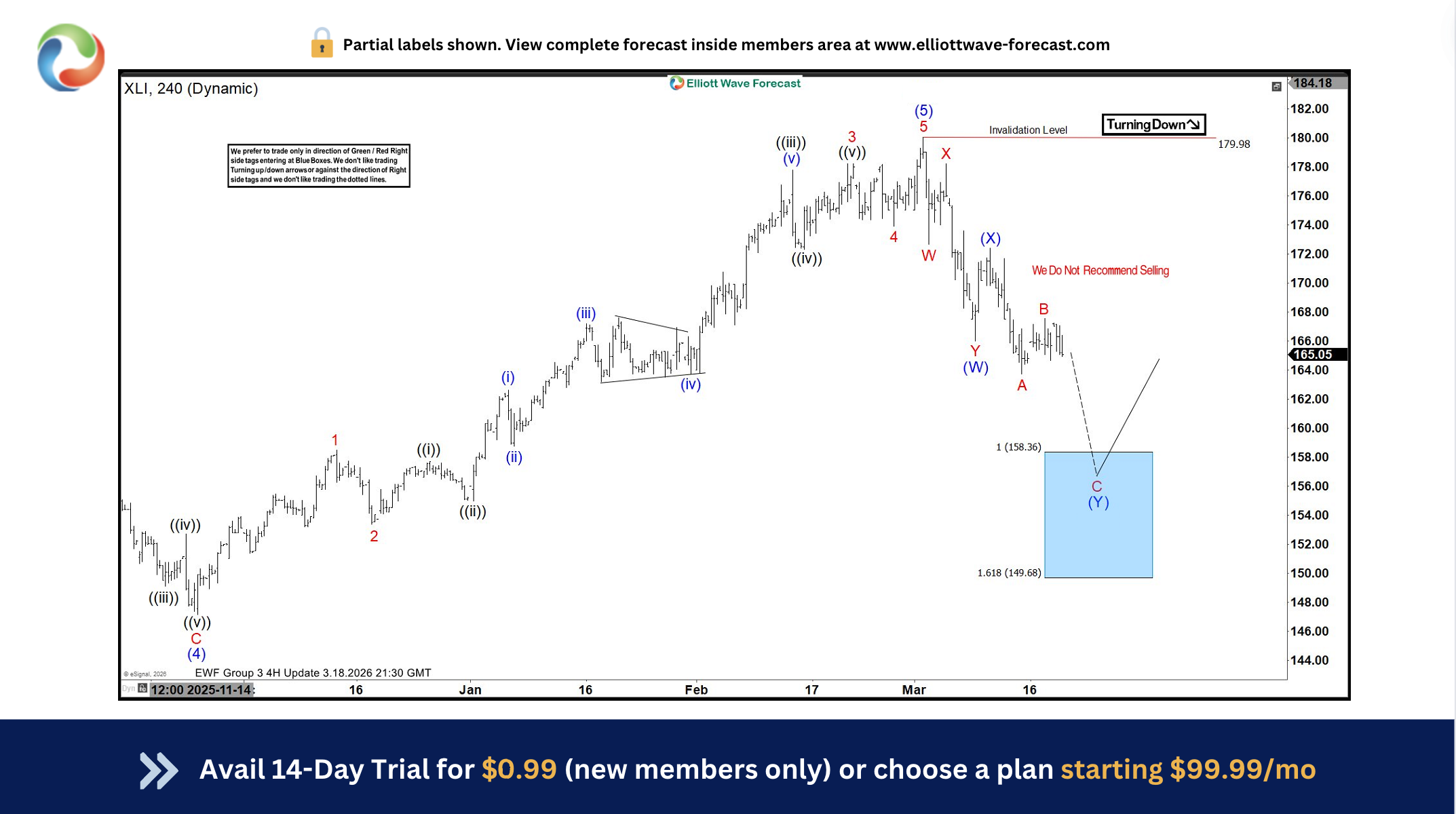
XLI ETF – In the example of the XLI ETF, the 5‑wave move up had already been identified. At EWF, we knew there was no need to chase the rally; instead, discipline required us to wait and let the market reveal what corrective structure would form. Once the pattern became clear, we could pinpoint the levels (158.36 – 149.68) where positions should be considered. From that point, it was all about patience and discipline—waiting for the market to come to us. Fast forward about two weeks, the opportunity finally arrived as price reached the Blue Box area, allowing us to enter with precision.
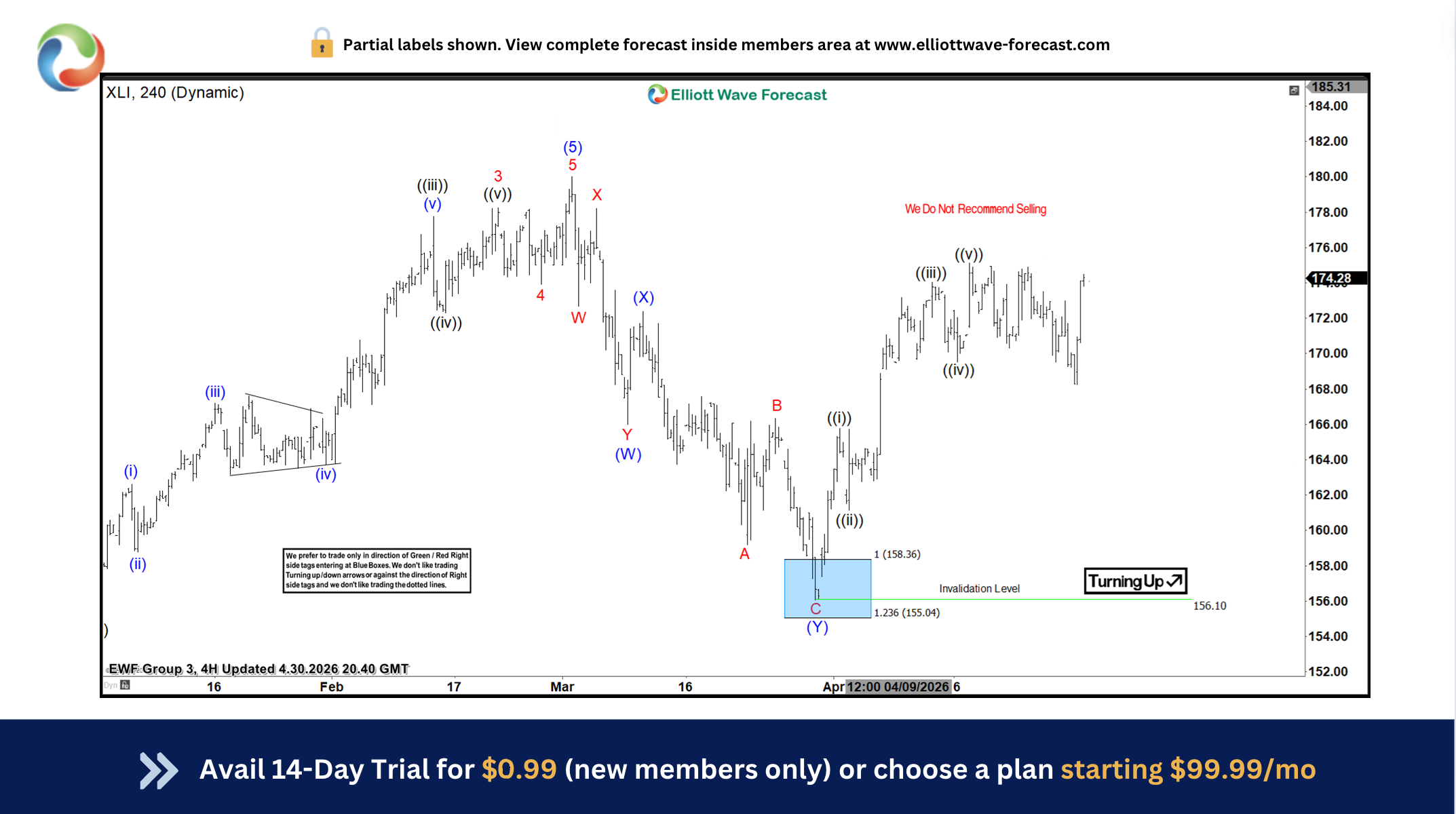
XLI ETF – Timing & Patience in Action Fast forward to the chart above: after waiting nearly two weeks, price finally reached the level we anticipated. We applied timing and patience, and when price hit the Blue Box, it wasted no time—rallying immediately. Without discipline, an average trader might have entered too early, only to be shaken out before the real move began. By following the structure and respecting timing, we caught the exact turning point. Almost instantly, the trade moved into profit. Within a few days, we were able to secure risk‑free positions and take partial profits, all in line with the rules and guidelines we follow at EWF.
Key Takeaway
Elliott Wave enforces patience by requiring traders to wait for valid structures, and it sharpens timing by mapping out where the next opportunity lies. In short: structure breeds discipline, discipline breeds timing, and timing breeds consistency.
Conclusion
Timing and patience are among the biggest reasons traders struggle, but Elliott Wave helps prevent unnecessary trades by enforcing discipline through structure and timing. Traders are constantly asking themselves:
- What wave is the market currently in?
- Is the structure complete?
- Is this impulse or correction?
- Has the setup been confirmed?
These questions act as filters, forcing traders to wait for clarity instead of reacting impulsively. By aligning entries with the natural rhythm of market psychology and respecting the structure, Elliott Wave helps traders time the markets more effectively. The result is fewer forced trades, more precise entries, and the realization that sometimes the best trade is no trade at all.
At Elliottwave Forecast (EWF), we deliver consistent market updates through regular charts update. Our analysts update 1‑hour charts four times daily and 4‑hour charts once per day across all 78 instruments. In addition, we host five live sessions each day and maintain a 24‑hour chatroom, providing clients with real‑time market guidance and answers to any questions they may have.
Source: https://elliottwave-forecast.com/elliottwave/how-elliott-wave-enforces-patience-and-timing/