
Hello everyone! In today’s article, we’ll examine the recent performance of Energy Sector ETF ($XLE) through the lens of Elliott Wave Theory. We’ll review how the rally from the April, 2026, low unfolded as a 5-wave impulse and discuss our forecast for the next move. Let’s dive into the structure and expectations for this ETF.
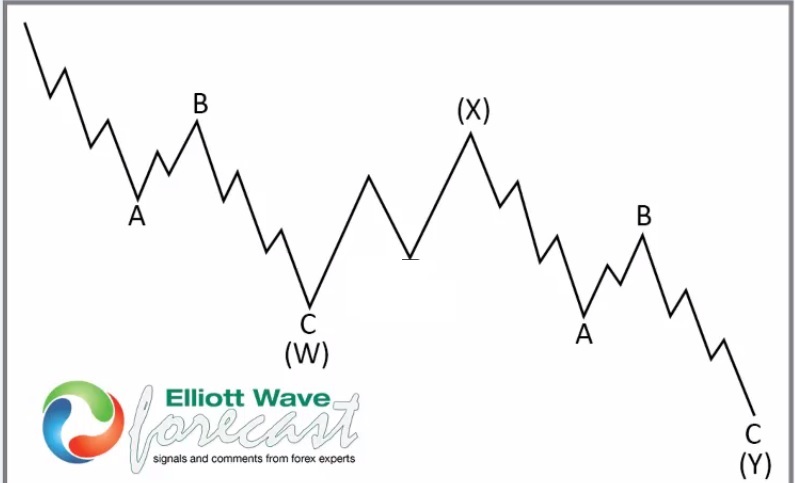
5 Wave Impulse + 7 Swing WXY correction

$XLE Daily Elliott Wave Chart 1.04.2026:
In our January 04, 2026 daily Elliott Wave analysis of $XLE, the structure was signaling that a major corrective phase had likely run its course.

From the March 2020 low, $XLE appeared to complete a 5-wave impulsive cycle, followed by a double zigzag (WXY) correction into Apr 2025 low. Another 5-wave impulsive cycle took place, followed by a correction into Oct 2025 low at black ((2)). With that corrective and cyclical sequence seemingly finished, our focus shifted to the next bullish phase.
At that time, we identified the rebound as the early stages of wave (3) of ((3)), where momentum typically accelerates. The expectation was straightforward: a push into new all-time highs should follow soon, assuming the market continued to respect the developing bullish structure.
$XLE Weekly Elliott Wave Chart 2.15.2026:
Fast forward to the February 15, 2026 update, and the market delivered the follow-through.

$XLE rallied into all-time highs, matching the roadmap laid out in the prior daily count. The ETF now appears to be trading higher in wave ((3)) of I, with the broader move still aiming for continuation.
From here, the projected upside path targets the 75–98 zone, which would complete a 5-wave advance from the April 2025 low. As long as price remains aligned with the current impulse, the bias stays pointed higher as $XLE works toward finishing out that larger 5-wave structure.
Conclusion
In conclusion, our analysis of $XLE continues to prove accurate, suggesting that the ETF remains well-supported against its April and Oct 2025 lows. For traders who capitalized on the opportunity presented, the $75–$98 zone should be closely monitored as the next significant objective. In the interim, keeping a vigilant eye out for any healthy corrective pullbacks could present fresh entry opportunities for those looking to join the trend.
By applying the principles of Elliott Wave Theory, traders can gain a deeper understanding of market cycles, better anticipate the structure of upcoming moves, and ultimately enhance their risk management strategies in dynamic markets like the current one for $XLE.